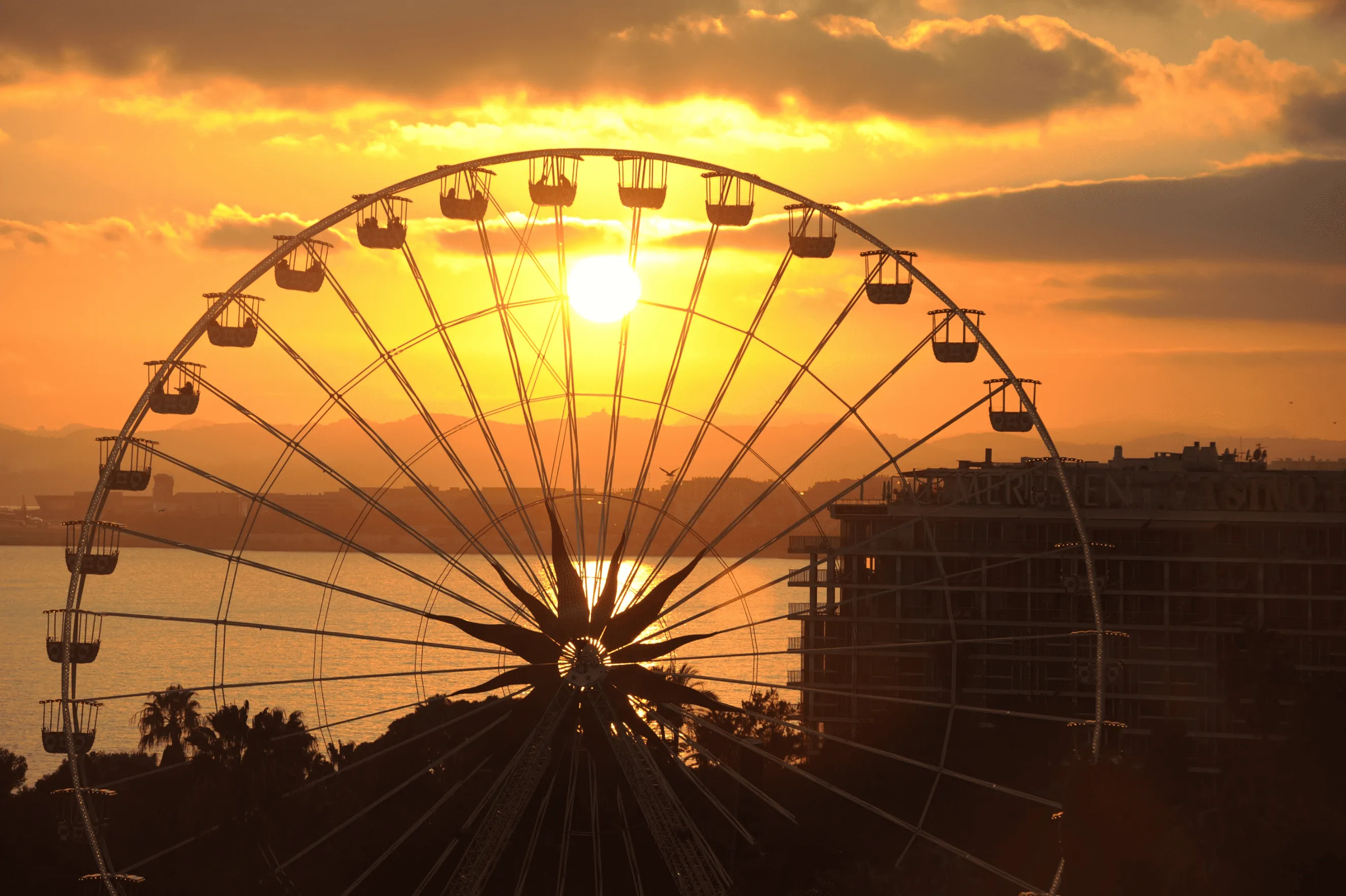
When the cold light sets the Mediterranean ablaze like a movie set. On the French Riviera, winter is the season of light. The coastline calms down, the air becomes clearer, and the sun, lower on the horizon, sculpts the landscape. Sunset takes on a unique dimension: colors intensify, reflections multiply, and the sky transforms into a veritable movie set. This winter spectacle is so extraordinary it is because the atmosphere is drier than in summer, the sun descends at a lower angle, and suspended particles—sometimes coming from the Sahara or the Po Valley, a large agricultural and industrial plain in northern Italy whose atmospheric particles can influence the colors of the sky on the Riviera—amplify the diffusion of reds and oranges. The cooled sea acts as a darker mirror, further enhancing the contrast. Here are the places where winter offers the most enchanting sunsets.
1. Cap d'Antibes: the glowing horizon
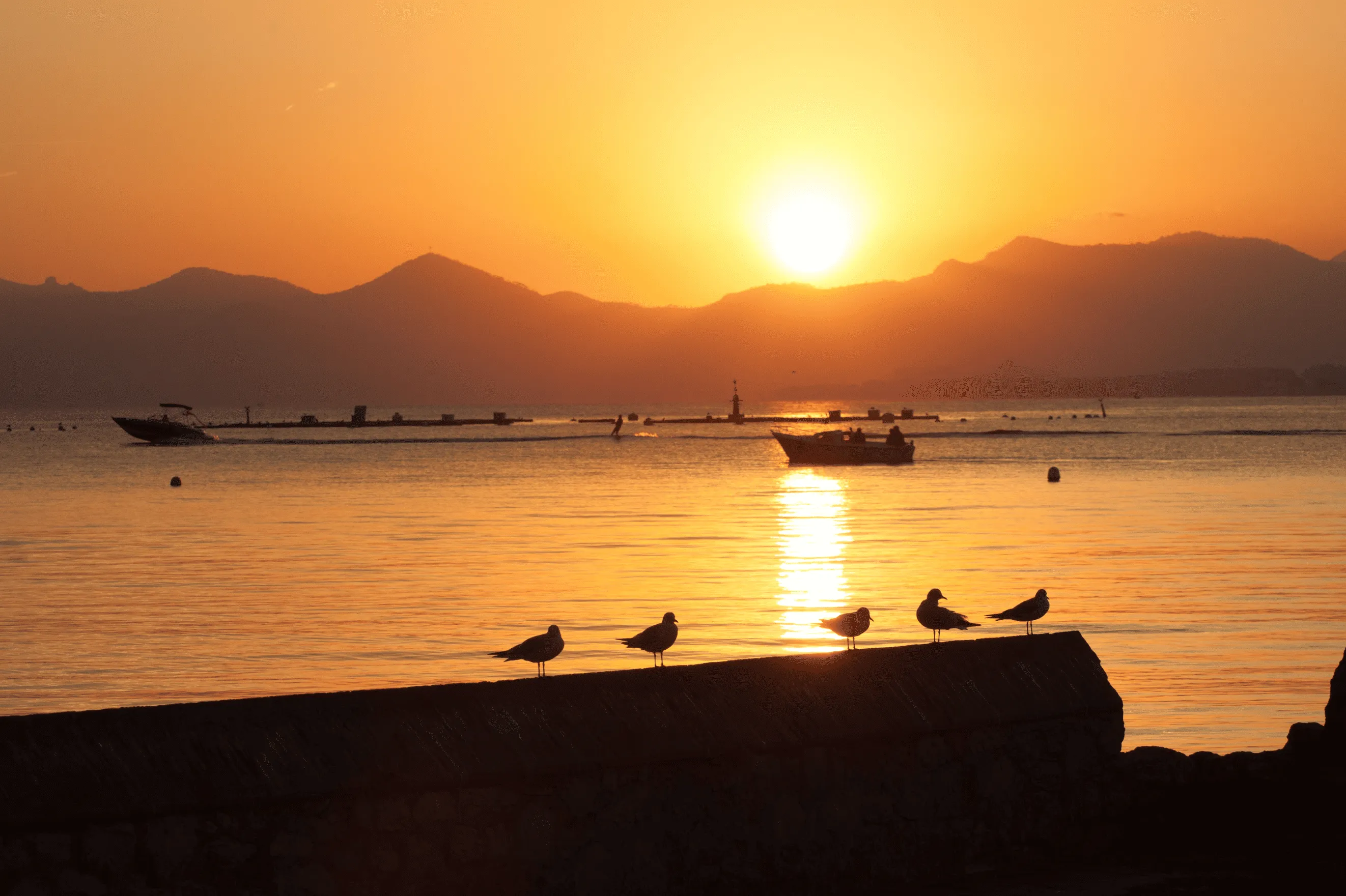
In winter, Cap d'Antibes is transformed into a veritable natural theater. From the Tire-Poil trail or Garoupe beach, the horizon opens up onto a sea of striking clarity. The cold air, free of mist, allows the light to spread more cleanly: oranges become coppery, pinks stretch longer, and winter purples glide over the sea like ink. The cape's perfect curve offers a vast view to the west, making it one of the few places where you can literally see the sun sink into the sea. Here, every evening feels like a grand, vibrant finale.
2. Baie des Anges, Nice: the low-angle lighting of great films
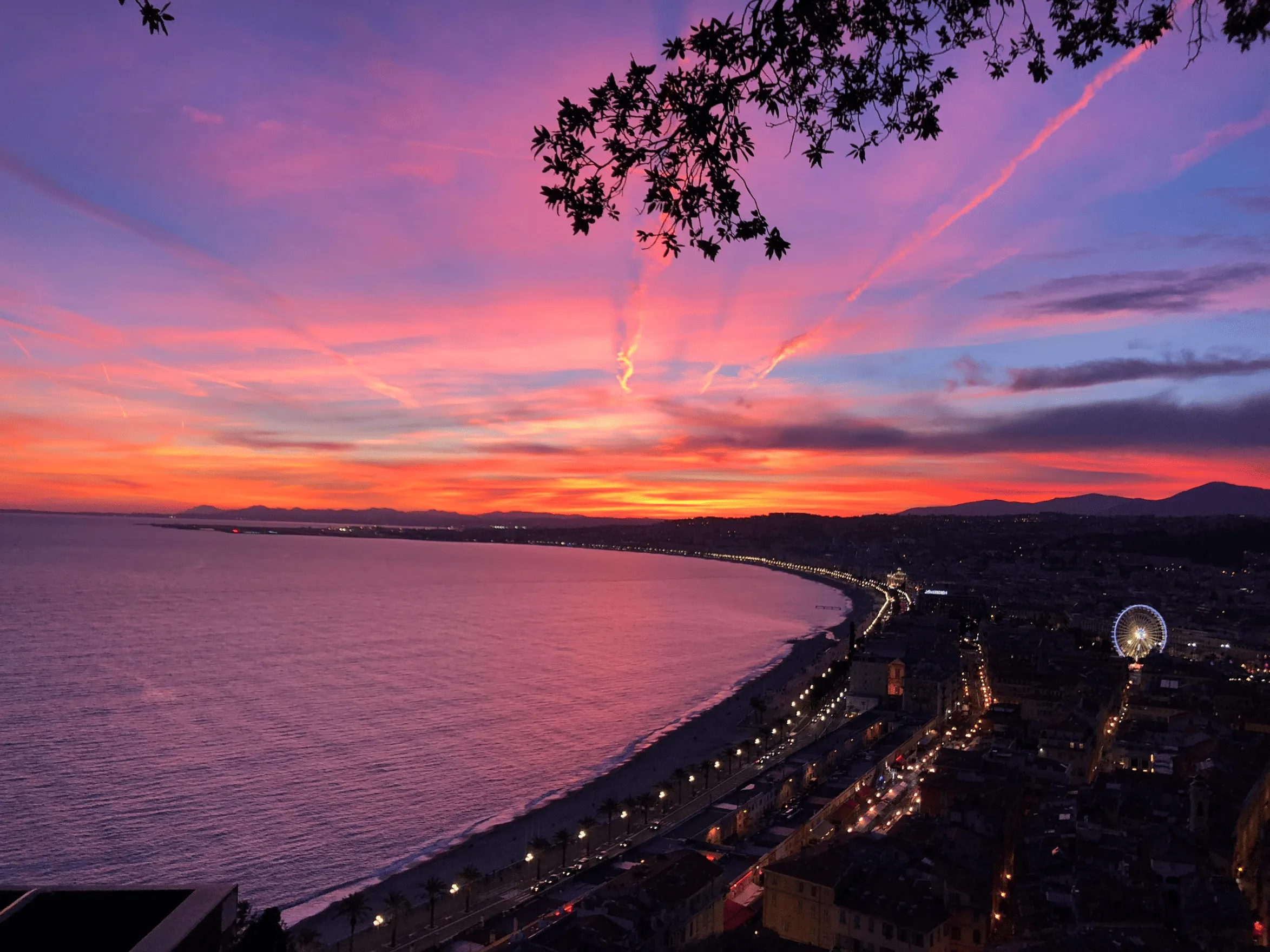
The Baie des Anges is a natural amphitheater. In winter, the low sun strikes the facades of the Promenade des Anglais with an oblique, almost cinematic light. Sitting on the pebbles or perched on the hill of the Château, you can see the city turn cold pink, then pale gold, while the Belle Époque buildings are bathed in a soft, pearly light that seems to make them vibrate from within. Above, the sky gradually bursts into shades of pink, orange, coral, and sometimes even a very subtle purple, as if the light were lingering on every particle in the atmosphere. Little by little, the last rays slide towards the hills and envelop them in a gradient of gold and copper. The angle of the winter sun plays a major role: its lower trajectory creates very long shadows, a contrast that looks like something straight out of an Impressionist painting. The sea, darker at this time of year, reflects the light like a slightly weathered mirror, creating the soft, almost pictorial glow that has inspired generations of painters and filmmakers.
3. Villefranche-sur-Mer: the colors of a winter harbor
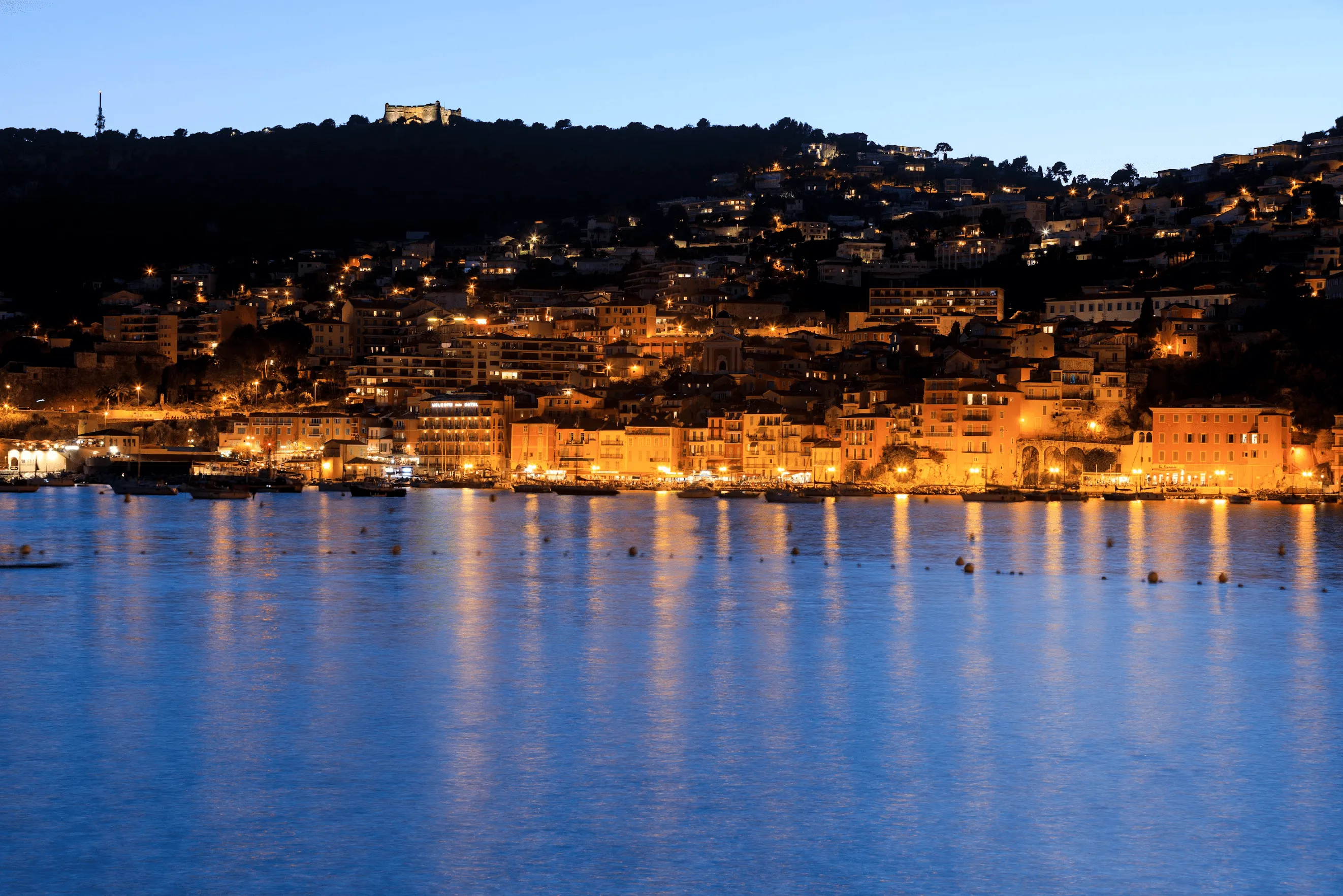
Villefranche is one of the places where this luminous phenomenon is most noticeable. The harbor, surrounded by hills, captures the last rays of daylight. In winter, thermal inversions—cold air at the bottom, warmer air at the top—produce a subtle diffraction that breaks down the light and intensifies the color gradients. From the Citadel or Marinières beach, the sky seems to change color in successive layers: powder pink, deep garnet, saturated mauve. The sea reflects these shades like a painter's palette. The tranquility of the season enhances the magic: not a ripple, just the long breath of winter and the lingering light.
4. Exotic Garden of Èze: a balcony suspended between sea and sky
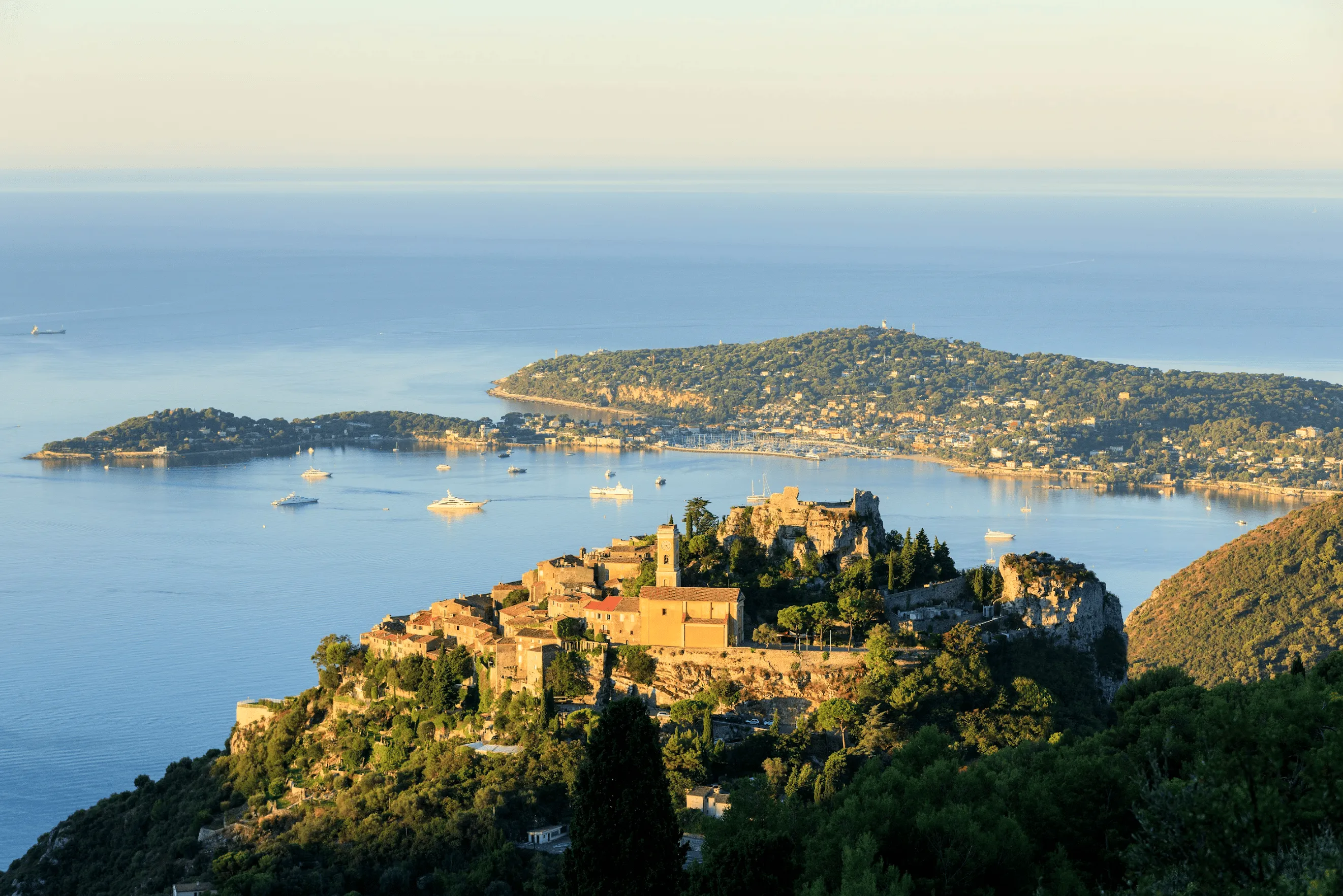
It is one of the most beautiful viewpoints on the coast in winter. At an altitude of over 400 meters, the village of Èze overlooks the entire coastline, and the exotic garden offers a rare view of the sun setting behind the hills before reflecting off the Mediterranean Sea. In winter, the altitude plays a key role. The air is extremely pure, and the light appears “stratified,” allowing you to observe the different layers of the atmosphere turning color one by one. It feels like watching a show in several acts, with the sea as the main stage. The impression of floating between two worlds is complete.
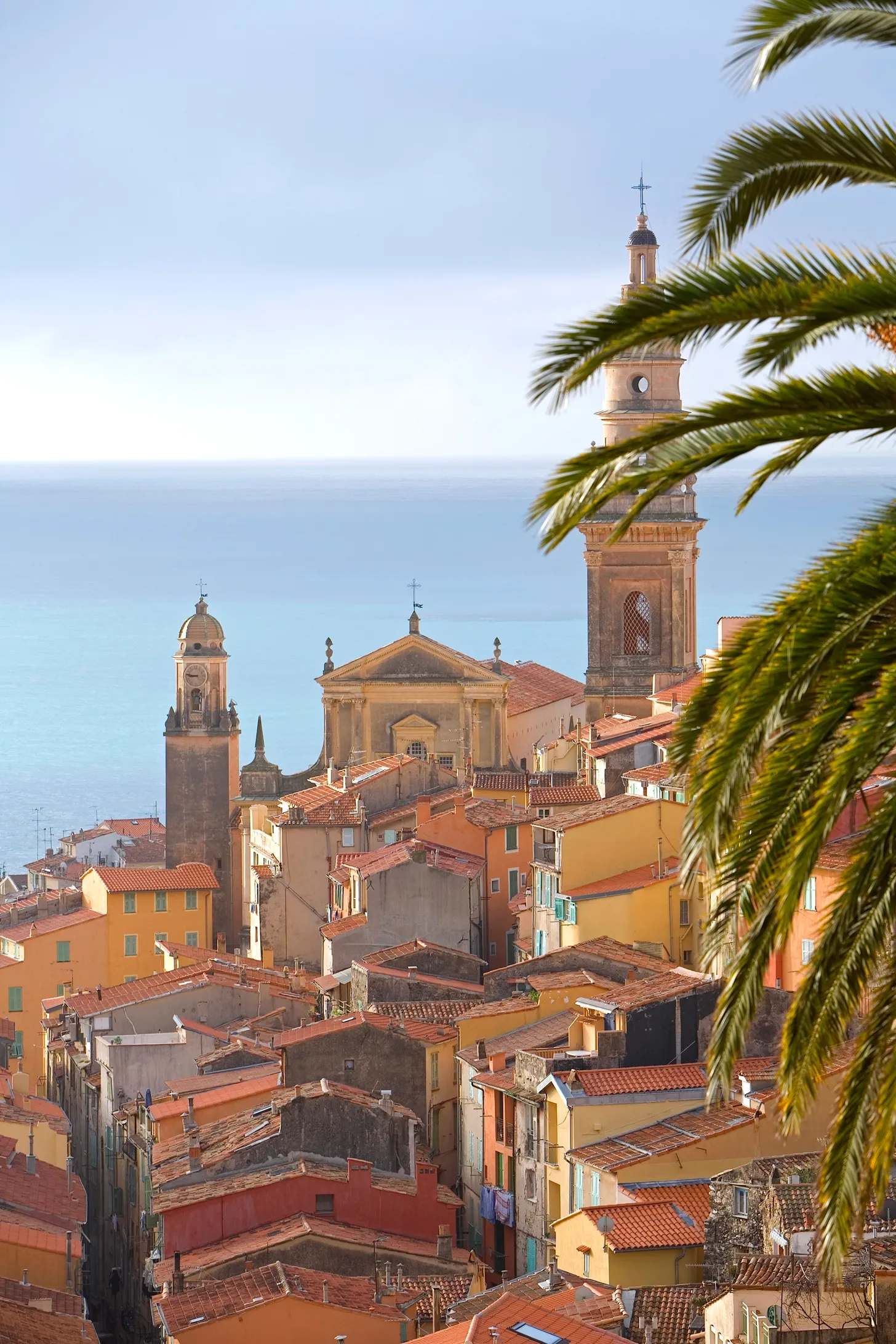
5. Menton: Italian pastels in winter light
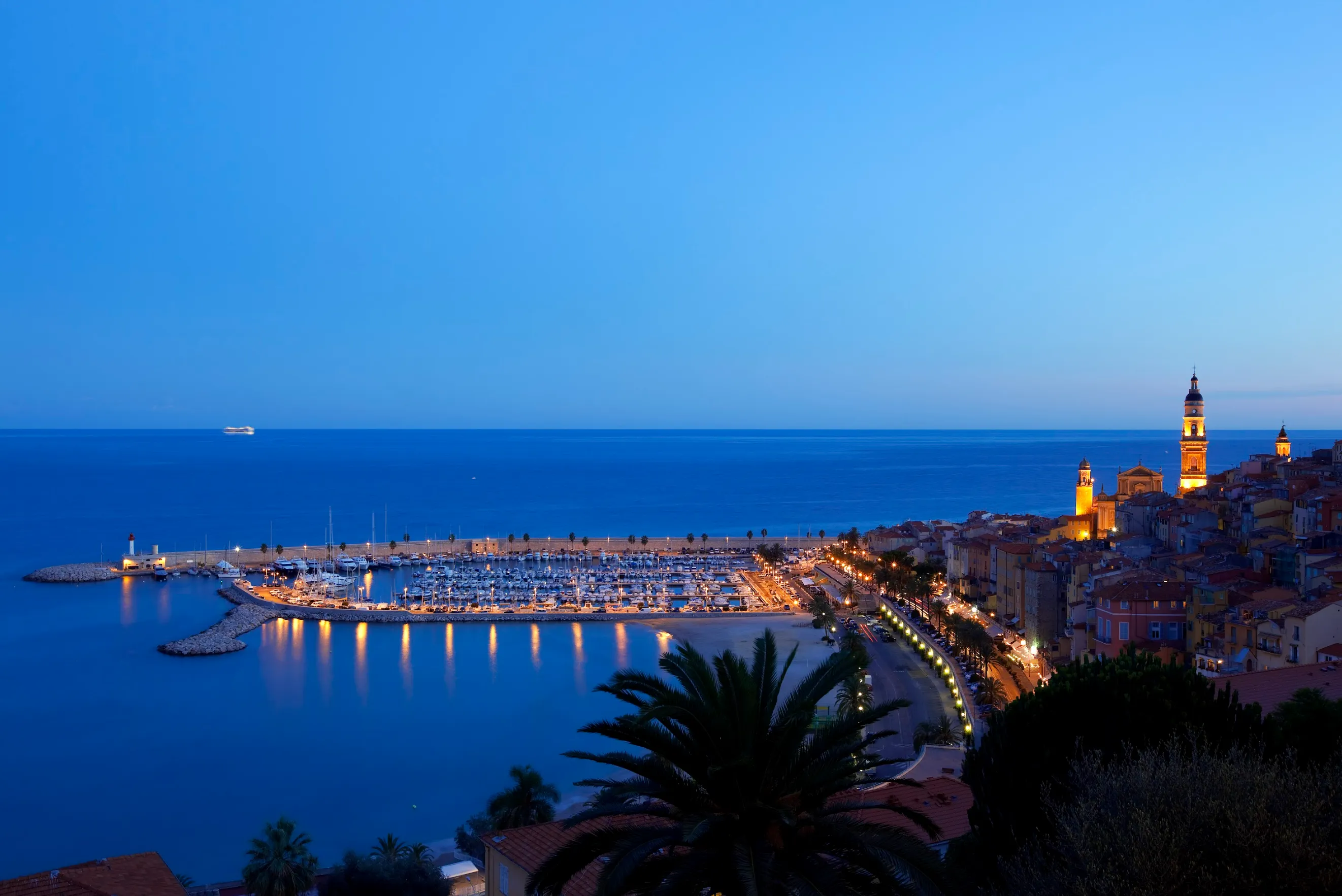
The last major French city before the border, Menton enjoys unique light in winter. The ochre facades warm up just as the sun disappears behind the mountains, giving the old town an almost picturesque appearance. The east winds, frequent at this time of year, carry very fine particles that intensify the pink and coral tones of dusk. The sea then takes on a milky blue color typical of the mild winters on the coast. The result: sunsets of an almost meditative softness, reminiscent of Italian films from the 1960s.
Seeing Corsica from the French Riviera: a winter privilege
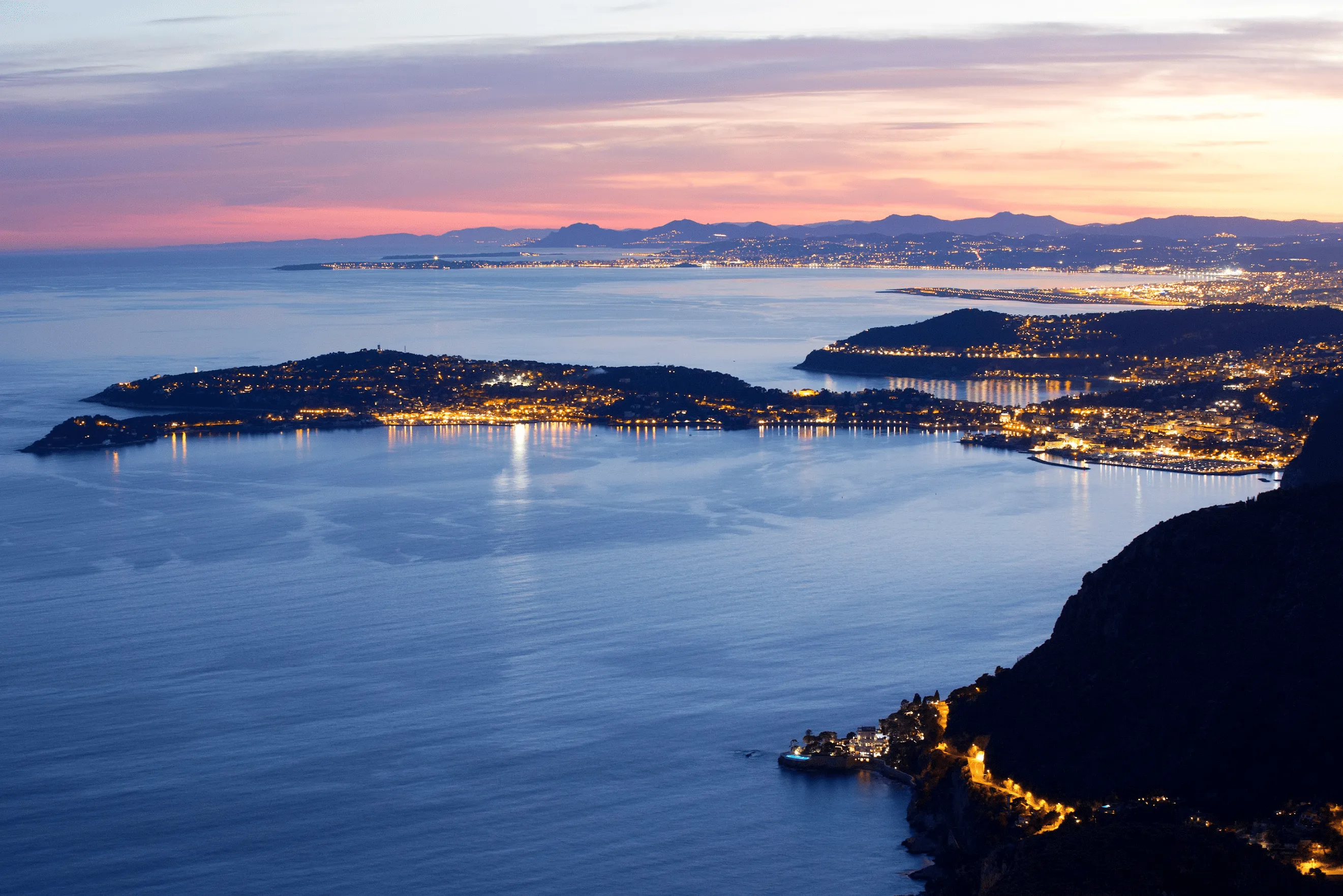
In winter, Corsica can sometimes be seen from the French Riviera, particularly from the heights of Nice, Èze, Cap d'Antibes, or Saint-Jean-Cap-Ferrat. This rare phenomenon—often occurring in the early morning or at sunset—is caused by a combination of cooling air, low humidity, and atmospheric refraction. The cold air brings distant objects closer together visually, the sea, darker in winter, creates a contrasting effect, and refraction slightly curves the rays of light, making it possible to see silhouettes located more than 200 kilometers away. When the conditions are right, the island stands out in the distance like a floating mountain, a perfectly real mirage suspended between sky and sea. Seeing Corsica on the horizon further reinforces the feeling of witnessing a rare, almost magical moment, where geography and light conspire to offer a spectacle of striking beauty.
Cover photo © Anais Brochiero


Associated places